Cloud infrastructure and data engineering consulting costs in Portugal can range from a few thousand euros for a focused assessment, cloud migration, or reporting initiative to tens of thousands of euros for multi-system migrations, enterprise data platforms, Microsoft Fabric implementations, and cloud modernization programmes. The final cost depends less on hourly rates and more on factors such as infrastructure complexity, data quality, security requirements, integrations, and long-term business objectives. In this guide, you’ll learn what cloud infrastructure and data engineering projects typically cost in Portugal, what drives those costs, and how businesses can budget more effectively. At BluTree, we help startups, SMEs, and mid-sized organisations across Portugal assess, design, migrate, optimise, and support cloud and data environments that enable analytics, automation, AI, and long-term growth.
Why cloud infrastructure & data engineering consulting cost vary
Cloud infrastructure consulting cost in Portugal can range from a focused technical assessment or small migration project to a multi-system programme involving secure cloud architecture, data engineering, analytics, automation, and ongoing managed support.
For Portuguese SMEs, startups, and mid-sized organisations, the most useful question is not simply, “What are the cloud consulting rates in Portugal?” Instead, it is:
What business problem will the project solve, what work is required to solve it safely, and what ongoing costs will remain after implementation?
A small business migrating one application or connecting a CRM to a reporting tool has a very different requirement from a company modernising legacy infrastructure, implementing secure cloud environments, building data pipelines, creating a data warehouse, and preparing its systems for automation or AI.
As a result, cloud modernization costs for Portuguese companies can vary substantially. The most visible result (such as a migrated application, a dashboard, or a cloud environment) is often only one part of the engagement. Significant effort may be required for discovery, architecture, Identity and Access Management, security, networking, data integration, testing, Infrastructure as Code, documentation, and support.
Important disclaimer
The figures below are indicative planning references, based on public Portuguese-market provider guides, consultancy directories, and broader industry pricing examples. They are not fixed BluTree prices and should not replace a scoped proposal.
Final cloud consulting prices in Portugal depend on:
- Project scope and desired business outcome
- Existing applications, infrastructure, and technical debt
- Number of cloud workloads, systems, databases, and integrations
- Data quality, volume, and refresh requirements
- Security, IAM, GDPR, governance, and recovery requirements
- Whether AWS, Azure, Google Cloud, Microsoft Fabric, or a hybrid environment is involved
- Infrastructure as Code, Terraform, DevOps, and CI/CD requirements
- Migration risk, downtime tolerance, and rollback planning
- Documentation, training, and knowledge transfer
- Ongoing monitoring, maintenance, cloud-cost optimisation, and support
Indicative cloud & data engineering costs in Portugal
The table below helps answer common questions such as “How much does cloud infrastructure consulting cost in Portugal?”, “What does Azure cloud migration cost in Portugal?”, and “How much does data engineering consulting cost in Portugal?”
| Engagement | Indicative planning range | Typical scope |
| Cloud and data readiness assessment | Fixed fee after discovery | Review of infrastructure, applications, data, security, operations, risks, and a prioritised roadmap |
| Small cloud project or one contained workload | Roughly €1,500–€5,000 | Basic cloud setup, small migration, targeted infrastructure improvement, or architecture review |
| Basic cloud migration or environment setup | Approximately €5,000–€15,000 | Smaller workload set, foundational IAM, networking, monitoring, backups, migration planning, testing, and documentation |
| Cloud modernization or secure cloud foundation | Approximately €15,000–€35,000+ | Multiple applications, more complex dependencies, Terraform, CI/CD, IAM, security baseline, monitoring, recovery, and handover |
| Data integration and BI foundation | Approximately €5,000–€25,000+ | Selected systems, data pipelines, data quality work, modelling, recurring reporting, and dashboards |
| Data warehouse or data lake implementation | Approximately €10,000–€40,000+ | Ingestion, transformations, data model, storage architecture, governance, security, and reporting foundations |
| Microsoft Fabric implementation | Approximately €10,000–€40,000+ | Fabric environment design, pipelines, Lakehouse or warehouse, semantic models, governance, Power BI, and enablement |
| Advanced data engineering programme | Approximately €30,000–€100,000+ | Multiple systems, extensive transformations, complex data architecture, automation, governance, and phased rollout |
| Managed cloud support | From approximately €500 monthly; increases by scope | Monitoring, maintenance, support, cloud-cost optimisation, incident help, reviews, and ongoing changes |
| On-demand cloud or data support | Variable | Troubleshooting, technical changes, reviews, optimisation, architecture advice, and targeted engineering work |
A Portugal-based cloud provider publicly promotes cloud migration services from €5,000 and managed services from €500 per month. In addition, Portugal-market consultancy directory listings include minimum project values from around $1,000 to $25,000 or more, depending on the supplier category, scale, and engagement type.
These figures should be treated as a budgeting starting point—not a substitute for technical discovery.
Recommended for You:
How We Built and Deployed a Secure Multi-Cloud Infrastructure for Startups in Portugal
Real-Time Data Integration Services in Portugal: Automate Reporting and Business Insights
Cloud Infrastructure and Data Engineering Consultant in Portugal: 7-Step Guide to Hire Experts
What drives cloud consulting costs?
1. Project scope and business outcome
The biggest cost driver is the problem you are trying to solve.
A business may say it needs cloud consulting, but the actual need could be:
- Moving an application from an on-premises server
- Improving backups and disaster recovery
- Implementing a secure AWS, Azure, or Google Cloud environment
- Reducing cloud expenditure
- Connecting CRM, ERP, accounting, e-commerce, and customer-support data
- Building a trusted business-intelligence foundation
- Creating an AI-ready data platform in Portugal
- Modernising applications and deployment processes
- Preparing for automation, Microsoft Copilot, predictive analytics, or AI agents
In other words, the cost rises when the project shifts from:
“Move this application to the cloud”
to:
“Make this business capability secure, scalable, integrated, monitored, recoverable, cost-controlled, documented, and ready for growth.”
This is why comparing quotes based only on a day rate can be misleading.
2. Existing infrastructure and migration complexity
The starting environment largely shapes Cloud migration cost in Portugal.
For example, moving a modern, self-contained application can be relatively straightforward. However, a legacy application with undocumented dependencies, several databases, security constraints, and integrations to finance or operational systems requires more preparation.
Costs often increase when an organisation has:
- Legacy or unsupported applications
- Older servers and undocumented configurations
- Custom-built systems
- Multiple connected applications
- Large data volumes
- Limited downtime tolerance
- Separate development, testing, staging, and production environments
- Strict backup and recovery needs
- A requirement for rollback planning and migration testing
- Limited internal technical capacity
For this reason, cloud architecture consulting cost in Portugal is not just about creating servers or storage. It includes reducing operational risk during and after migration.
3. Cloud platform and architecture choices
AWS, Microsoft Azure, and Google Cloud offer broad service portfolios and usage-based pricing. The right platform depends on your existing systems, internal skills, security requirements, data workloads, applications, licences, and future plans.
For example:
- Azure can be a natural fit for organisations already using Microsoft 365, Power BI, Dynamics, or Microsoft security and identity tools.
- AWS may suit businesses looking for a wide range of managed cloud services, cloud-native architecture, or flexible infrastructure options.
- Google Cloud can be attractive for some analytics, data, and AI workloads.
However, platform choice is only one part of total cost. The architecture matters just as much: how resources are sized, connected, secured, monitored, automated, and maintained has a major impact on both implementation effort and recurring cloud spend.
A responsible cloud consultant in Portugal should recommend the platform and architecture that suit the business rather than forcing every project into a predetermined toolset.
Recommended for You: How to Choose a Data Analytics Consultant in Portugal: 7 Steps for SMEs (2026 Guide)
Data engineering consulting cost in Portugal
Data engineering consulting cost in Portugal depends primarily on how difficult it is to make business data reliable and usable.
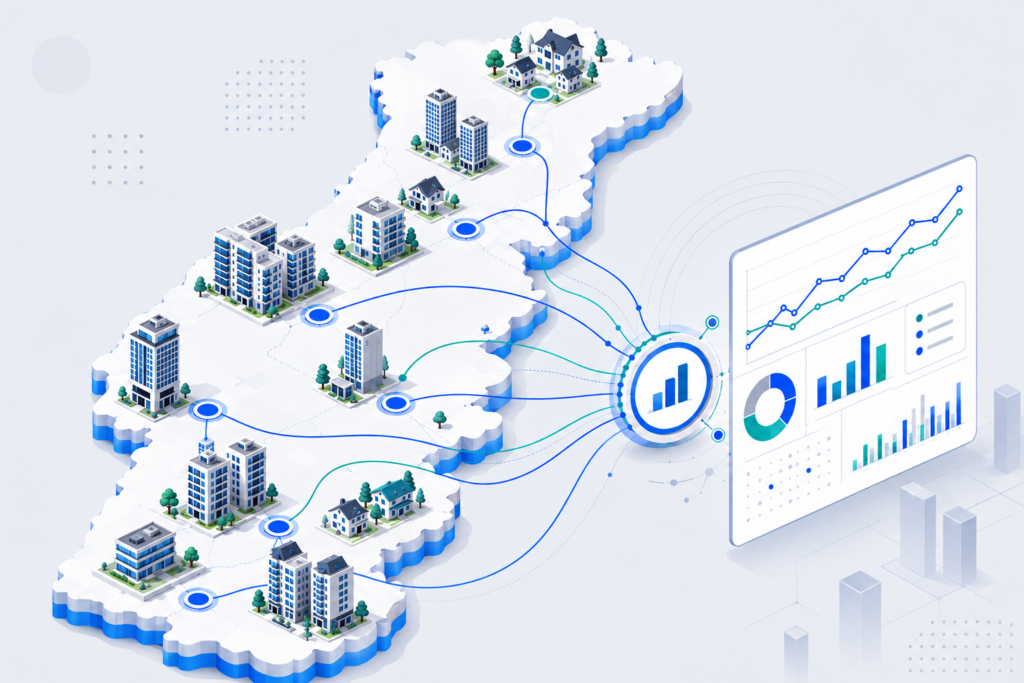
Cloud infrastructure provides the environment where systems and data can run. Data engineering brings data together, cleans it, transforms it, models it, governs it, and makes it available for reporting, automation, analytics, and AI. This means a simple dashboard is rarely the entire project.
A small business with clean data from two or three accessible sources may need a straightforward integration and reporting foundation. For example, it may connect a CRM, accounting platform, and e-commerce store to create a reliable sales and finance dashboard.
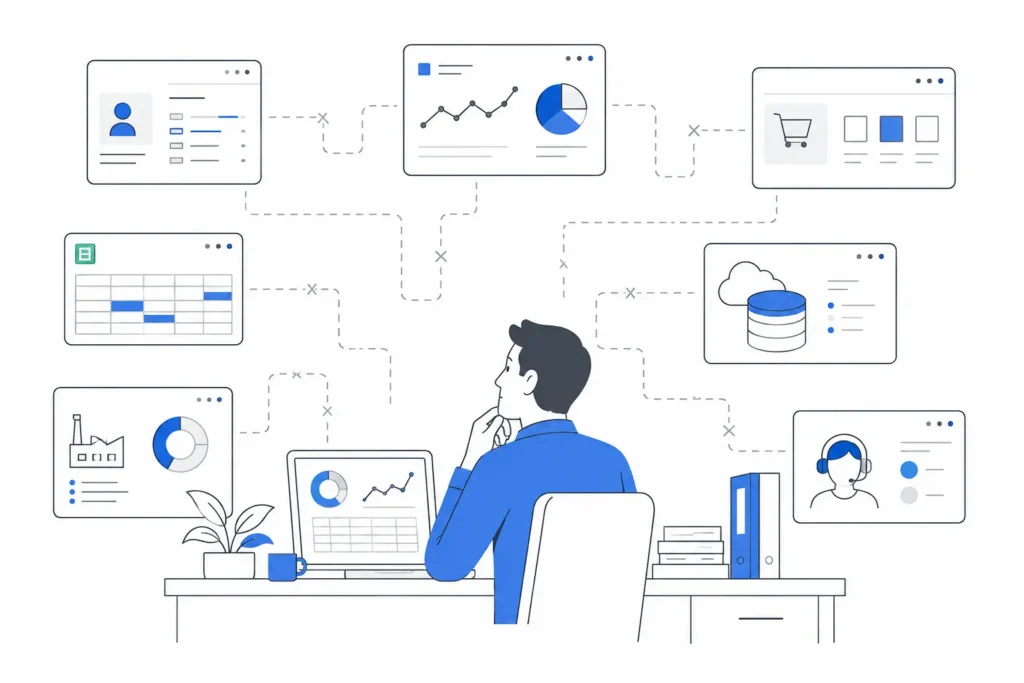
By contrast, a larger organisation may have data spread across an ERP, CRM, finance system, marketing platforms, customer support tools, spreadsheets, departmental databases, and older internal applications. The data may contain duplicates, missing fields, inconsistent customer IDs, conflicting product definitions, and unclear KPI logic.
In that situation, meaningful analysis cannot begin until the data environment has been prepared.
Factors that affect data engineering services cost in Portugal
- Number of systems and data sources
- API availability, quality, and access limits
- Data volume and historical depth
- Refresh requirements: daily, hourly, real-time, or event-driven
- Data quality and cleansing needs
- Transformation complexity and business rules
- Data warehouse, data lake, or lakehouse architecture
- Microsoft Fabric implementation requirements
- Data governance, lineage, permissions, retention, and audit requirements
- Dashboard, report, or self-service BI requirements
- Need for predictive analytics, machine learning, or AI integrations
The visible output may be a dashboard. However, the most important work often happens underneath it: creating trustworthy data pipelines and a reliable source of truth.
Data warehouse and data lake implementation costs
The cost of building a data warehouse in Portugal depends on the number of source systems, the transformations required, the intended user base, data volumes, governance needs, and whether the business needs simple reporting or a broader analytics foundation.
A warehouse is often designed for structured reporting and consistent business metrics. A data lake can store raw and varied data at scale. A lakehouse aims to combine flexible data-lake storage with warehouse-style structure and performance.
For SMEs, the correct choice is not always the biggest or most complex option. A strong data engineering consultant in Portugal should recommend an architecture proportionate to the business’s size, maturity, operational needs, and growth plans.
A data lake implementation cost in Portugal may rise where the project requires large-scale ingestion, streaming data, several data formats, machine-learning workloads, security segmentation, or detailed governance. Similarly, a data warehouse project becomes more expensive when data quality, historical migration, cross-department KPI definitions, and many reporting users are involved.
Microsoft Fabric implementation cost
Many organisations now ask: “How much does Microsoft Fabric implementation cost?”
There are two separate costs to understand:
- Implementation and consulting: architecture, data ingestion, pipelines, Lakehouse or warehouse design, semantic models, Power BI, governance, testing, training, and support.
- Platform and consumption costs: Fabric capacity, OneLake storage, Power BI licensing, and any connected Azure or third-party services.
Microsoft offers Fabric through capacity-based pricing, with consumption and reservation options, while storage is charged separately. Capacity requirements depend on the number of users, workloads, refresh frequency, data volumes, engineering activity, and reporting needs.
Published Microsoft Marketplace consulting offerings illustrate how much scope can vary: one Fabric deployment package is listed at €19,428, while another four-week implementation offering is listed at $35,000. These are external supplier examples, not Portugal-specific market averages and not BluTree prices; they demonstrate why a Fabric implementation needs clear scoping before any estimate is treated as comparable.marketplace.
For a smaller organisation, a focused Fabric pilot may be more appropriate than a large platform rollout. A sensible first phase might connect a limited number of sources, establish a Lakehouse, build a governed semantic model, and deliver one or two high-value reports before expanding.
Recommended for You: How Much Does AI Consulting Cost? A Guide for Businesses in Portugal
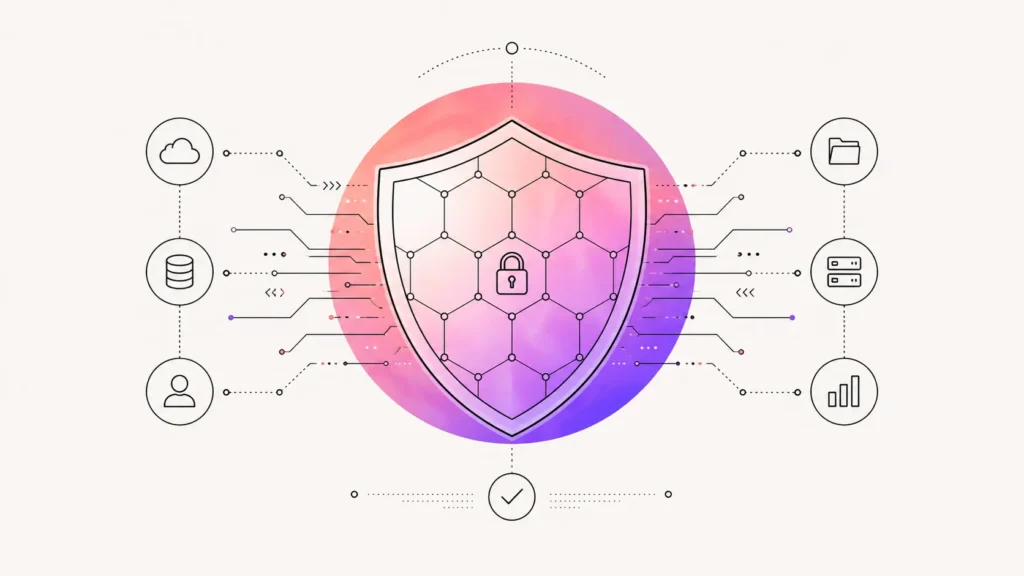
Security, IAM, governance, and compliance
Security and resilience are significant cost factors because they are essential to a functioning cloud environment.
A proper implementation may include:
- Identity and Access Management (IAM)
- Role-based access and least-privilege permissions
- Multi-factor authentication
- Network configuration and segmentation
- Encryption and secure API connections
- Secrets management
- Logging, monitoring, alerting, and audit trails
- Backup and recovery design
- Disaster-recovery planning
- Data classification and retention
- GDPR-aware design where personal data is processed
These elements require planning and engineering time. Nevertheless, they reduce the risk of unauthorised access, data loss, difficult audits, operational disruption, and expensive remediation.
GDPR does not require a specific cloud provider. Instead, it requires organisations processing personal data to implement appropriate safeguards based on the processing and risks involved. For that reason, a well-scoped cloud project should discuss security, access, data handling, and governance from the beginning.
Infrastructure as Code, Terraform, and DevOps
A business may question why its cloud consultant recommends Terraform, CLI-based configuration, version control, CI/CD, and automated deployments.
The answer is repeatability.
Infrastructure as Code defines cloud resources—networks, storage, databases, permissions, monitoring, compute, and other components—in version-controlled configuration files instead of relying on manual settings in a cloud console.
Terraform is widely used for this purpose. Although it can increase initial project effort, it can reduce risk and maintenance burden over time by making infrastructure:
- Repeatable
- Auditable
- Reviewable
- Easier to recreate
- Easier to update safely
- Less vulnerable to configuration drift
- Better documented for future support and handover
For a temporary experiment or very small workload, this level of structure may not be necessary. However, it is often worthwhile for production systems, regulated environments, sensitive data, multiple environments, and growing businesses.
Recurring cloud costs: what happens after implementation?
Consulting fees are only one part of the budget. AWS, Azure, Google Cloud, and Microsoft Fabric also generate recurring consumption or licence costs.
Typical monthly cloud costs may include:
- Compute capacity, virtual machines, containers, or serverless workloads
- Storage and backup capacity
- Databases
- Data processing and data transfers
- Network egress
- Monitoring, logging, and security services
- Microsoft Fabric capacity and OneLake storage
- Power BI, CRM, ERP, or other software licences
- Third-party integration and data-quality tools
- Separate development, testing, staging, and production environments
- AI model or API usage where applicable
This is why a good consultant should include cost visibility and optimisation in the design. That may involve tagging resources, setting budgets and alerts, reviewing idle capacity, rightsizing services, automating non-production shutdowns, and monitoring consumption trends.
On-demand support or monthly retainer?
After launch, businesses usually choose between on-demand support and a monthly support arrangement.
| Support model | Best suited to |
| On-demand support | Occasional troubleshooting, architecture reviews, optimisation, technical changes, or advisory work |
| Monthly retainer | Predictable access to engineering capacity, routine maintenance, small improvements, cost reviews, and data-pipeline support |
| Managed cloud support | More critical environments requiring monitoring, incident help, maintenance, backup checks, security reviews, and defined service processes |
A business with a small, stable cloud environment may only require occasional help. Conversely, an organisation that depends on its infrastructure or data platform for daily operations may benefit from retainer-based support or a managed cloud arrangement.
BluTree’s Cloud and Data Readiness Assessment
Before committing to a larger transformation, BluTree offers a paid, fixed-scope Cloud and Data Readiness Assessment.
After an initial discovery call, BluTree agrees a clear assessment scope and fixed price based on the size and complexity of the business’s environment. This avoids applying one standard price to organisations with very different systems, data, security needs, and operational requirements.
The assessment can review:
- Existing cloud infrastructure and applications
- CRM, ERP, finance, e-commerce, support, marketing, and operational systems
- Data sources, integrations, quality, and reporting requirements
- Cloud architecture, usage, and potential cost-optimisation opportunities
- IAM, access controls, security posture, backups, and recovery readiness
- Current operational processes and technical constraints
- Requirements for analytics, Microsoft Fabric, automation, predictive analytics, or AI
- Risks, quick wins, priorities, and realistic next steps
BluTree then provides a findings report and a prioritised implementation roadmap. This helps clients understand what should be done first, what can be phased, and what level of effort is likely to be required before committing to implementation.
Did you know we have a READY-TO DEPLOY MULTI CLOUD INFRASTRUCTURE?

How to compare cloud consulting proposals
When comparing cloud consulting Portugal proposals, do not compare only hourly rates, day rates, or headline project prices.
Ask each provider to separate:
- Discovery and architecture design
- Cloud migration and implementation
- Data integration, transformation, and quality work
- Security, IAM, backup, recovery, and governance
- Terraform, Infrastructure as Code, DevOps, and CI/CD
- Testing, rollout, rollback, and validation
- Documentation, training, and knowledge transfer
- Cloud consumption and software licensing
- On-demand, retainer, or managed-support costs
- Assumptions, exclusions, dependencies, and change requests
You should also ask:
- What business outcome will the project support?
- Which systems and workloads are included?
- What needs to be true for the quoted price to remain valid?
- What ongoing cloud, licence, and support costs should we expect?
- How will the environment be secured, monitored, backed up, and recovered?
- Who owns the cloud accounts, Terraform code, data models, documentation, and credentials after delivery?
- How will cloud expenditure be monitored and optimised?
- What training and handover will our internal team receive?
- How will success be measured?
Why the cheapest quote may not be the lowest cost
A lower proposal is not automatically poor value. It may simply cover less work.
For instance, one consultant may quote to move a server to the cloud. Another may include architecture design, IAM, network security, backups, recovery testing, monitoring, Terraform, documentation, cost controls, testing, and post-launch support.
The first proposal may be cheaper upfront. However, the second may produce a safer, more maintainable, and less costly environment over time.
Therefore, the right question is not:
“Which quote is the cheapest?”
It is:
“Which scope provides the appropriate level of security, resilience, data reliability, operational control, and long-term value for our business?”
How BluTree helps businesses in Portugal
BluTree helps Portuguese SMEs, startups, and mid-sized organisations build cloud and data foundations that support operational growth.
Our services include:
- Cloud strategy, architecture, and migration
- AWS, Azure, and Google Cloud implementation
- Cloud infrastructure for small businesses in Portugal and growing mid-sized organisations
- IAM, networking, security, monitoring, backup, and recovery
- Terraform, Infrastructure as Code, and CLI-based cloud provisioning
- DevOps and CI/CD pipelines
- Cloud-cost optimisation and operational visibility
- Data integration and data engineering for SMEs
- Data warehouses, data lakes, lakehouses, and Microsoft Fabric
- Business intelligence infrastructure in Portugal
- Managed cloud support, on-demand technical support, and retainer-based optimisation
- Workflow automation, predictive analytics, AI-ready data platforms, and custom AI applications
We start with the business objective, assess the technical reality, and define a solution that is proportionate to your systems, risks, budget, and growth plans.
Book an appointment with us today at BluTree IT Solutions.
Frequently asked questions
How much does cloud infrastructure consulting cost in Portugal?
Cloud infrastructure consulting cost in Portugal can begin in the low thousands for a focused assessment, small migration, or contained workload. More complex cloud foundations, multi-system migrations, and managed data platforms commonly require larger budgets.
Public Portugal-market sources show provider rate bands around $25–$99 per hour, with more specialised work sometimes listed at $100–$199 per hour or above. The most reliable cost estimate comes after discovery, because the scope depends on applications, data, security, migration risk, and required support.
How much does data engineering consulting cost in Portugal?
Data engineering consulting cost in Portugal varies based on the number of systems, data quality, data volume, integration requirements, refresh frequency, reporting needs, and governance requirements.
A focused project connecting a few clean data sources may fall into the lower end of the project ranges. A broader data platform involving ERP, CRM, finance, e-commerce, marketing, operational databases, a warehouse or lakehouse, and automation can become a multi-phase investment in the tens of thousands of euros.
What does Azure cloud migration cost in Portugal?
Azure migration cost in Portugal depends on the application or workload being moved, its dependencies, data volume, downtime tolerance, security needs, migration testing, backup and recovery requirements, and the Azure services required after migration.
A contained migration may start in the low thousands, while multi-application projects with complex data, integrations, IAM, Terraform, DevOps, monitoring, and recovery processes require a tailored estimate. The same principle applies to AWS and Google Cloud migrations.
How much does Microsoft Fabric implementation cost?
Microsoft Fabric implementation cost includes both professional services and recurring platform costs. Implementation may cover architecture, ingestion, pipelines, Lakehouse or warehouse setup, semantic models, governance, Power BI, testing, training, and support. Platform spending includes Fabric capacity, OneLake storage, licences, and potentially other connected services.
External Microsoft Marketplace listings demonstrate the broad range of implementation scope, with examples listed at €19,428 and $35,000. These are not Portuguese market averages or BluTree prices, but they show why the final cost must be based on a clear solution design.azure.
What affects cloud consulting costs in Portugal?
The main factors are project scope, existing technical estate, application complexity, data sources, integration requirements, security and IAM needs, GDPR considerations, migration risk, downtime tolerance, Terraform and DevOps requirements, documentation, training, and ongoing managed support.
Cloud-consumption charges and software licences are also separate recurring costs that should be considered alongside implementation fees.
Is Terraform worth the additional cost for an SME?
Terraform can be worthwhile for SMEs that run important production systems, have sensitive data, need several cloud environments, expect to grow, or want infrastructure that is easier to audit and maintain.
It may add setup work at the beginning, but it can make cloud environments repeatable, version-controlled, safer to change, and easier to support. For a short-lived experiment or very small workload, the additional structure may not always be required.
Should we start with a Cloud and Data Readiness Assessment?
Often, yes. An assessment is particularly valuable when a business is unsure about its current infrastructure, data quality, system dependencies, security posture, cloud spend, or the best sequence for migration, reporting, automation, and AI initiatives.
BluTree’s paid, fixed-scope Cloud and Data Readiness Assessment provides a findings report and prioritised roadmap after reviewing the environment and requirements. This helps a business make informed investment decisions before it commits to a larger implementation.
Talk to BluTree
Cloud and data investments should be evaluated as foundations for resilient operations, trusted reporting, automation, analytics, and future AI—not simply as technology expenditure.
BluTree works with businesses across Portugal on cloud infrastructure, data engineering, Azure, AWS, Google Cloud, Terraform, Microsoft Fabric, DevOps, analytics, managed cloud support, automation, and AI-ready data platforms.
Contact BluTree to discuss a Cloud and Data Readiness Assessment, cloud migration, data engineering project, managed support arrangement, or on-demand technical-support requirement.
Information from the following sources were used in this article: