For Portuguese SMEs and mid-sized businesses, cloud infrastructure and data engineering are no longer just IT concerns. They are the foundation for reliable reporting, business intelligence, automation, customer insight, and scalable operations. But hiring the right consultant can be difficult. As such a company may offer cloud migration, data engineering, DevOps, or analytics services without understanding how those technologies need to work together.
The right partner should do more than move servers to the cloud or build a data platform. They should understand your business, assess your existing systems, design an appropriate architecture, and help you build a secure and maintainable technology foundation.
This guide explains how to hire a cloud infrastructure consultant in Portugal or data engineering consultant in Portugal based on business needs, technical capability, security, cost, and long-term value.
Why cloud infrastructure and data engineering matter
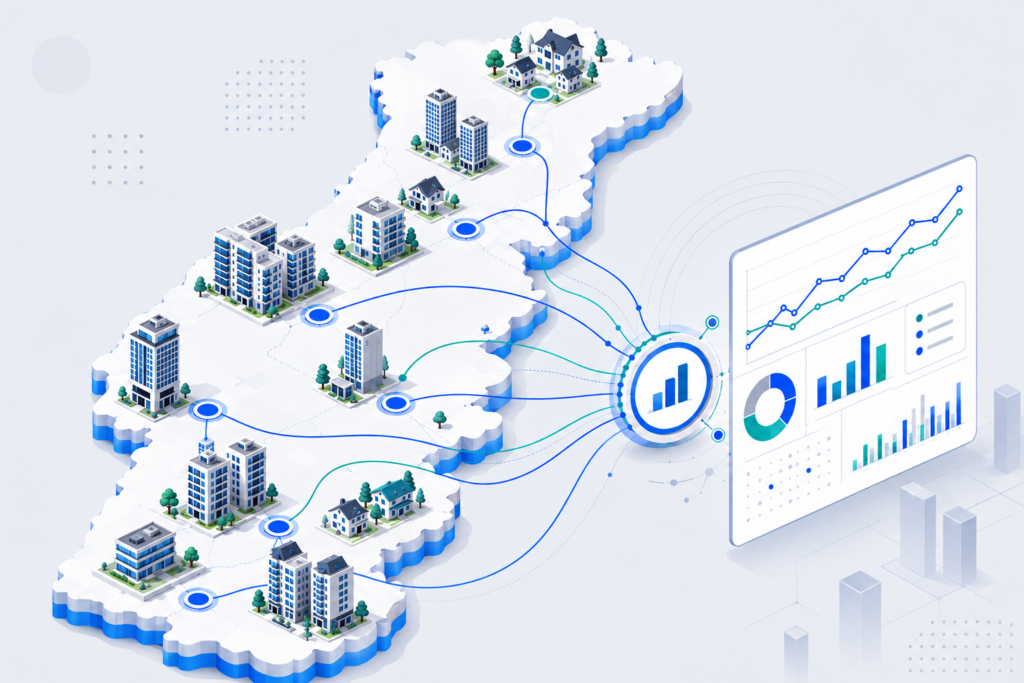
Cloud infrastructure provides the environment where your applications, systems, and data operate. Data engineering makes that data useful by connecting systems, improving data quality, building reliable pipelines, and making information available for reporting, automation, analytics, and AI. The two are closely connected.
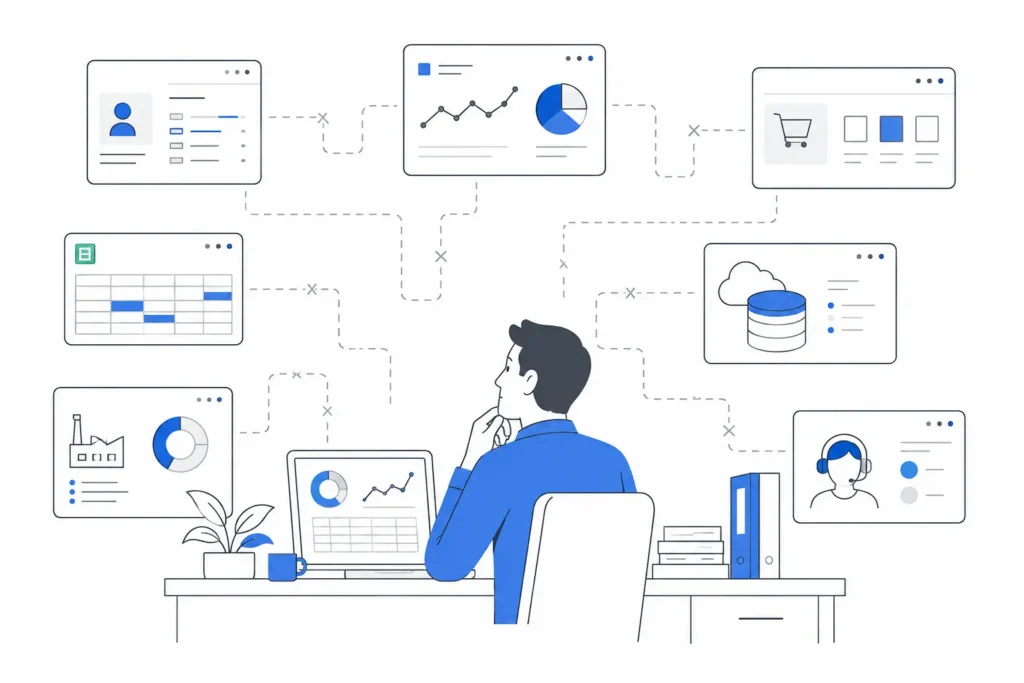
You can migrate an application to AWS, Azure, or Google Cloud and still have disconnected systems, manual spreadsheets, inconsistent KPIs, or unreliable reporting. Likewise, you can build an impressive dashboard but struggle to trust the results because the underlying data is incomplete, duplicated, outdated, or manually collected.
In the light of this, a strong technology partner should therefore look beyond individual tools and consider the cloud, data, security, integrations, and business processes together.
The 7-Step Guide to Hiring a Cloud Infrastructure Consultant for businesses in Portugal
1. Start With the Business Problem
One of the biggest mistakes businesses make is starting with technology.
The conversation often begins with: “Should we move to Azure, AWS, or Google Cloud?”
That is an important question, but it should not be the first one.
Start with: “What business problem are we trying to solve?”
For example, a business might want to:
- Reduce manual reporting.
- Improve operational visibility.
- Connect CRM, ERP, finance, and other systems.
- Reduce technology costs.
- Improve application reliability.
- Prepare its data for AI and automation.
- Scale its technology as the business grows.
The technology should follow from the business requirement.
| Business objective | Potential requirement |
| Reduce manual reporting | Data integration, automated refreshes, Power BI or Fabric |
| Improve operational efficiency | Workflow automation and API integration |
| Support business growth | Scalable infrastructure and performance planning |
| Improve customer insight | Connected CRM, transaction, support, and marketing data |
| Reduce technology risk | IAM, backup, monitoring, and disaster recovery |
| Prepare for AI | Trusted data, secure permissions, and reliable integrations |
| Control cloud costs | Usage analysis, rightsizing, budgets, and cost monitoring |
A good consultant should be able to translate a business objective into a practical technical plan.
Recommended for You: AI Consulting & Business Automation Services in Portugal
2. Check Real Cloud Platform Experience
Certifications can demonstrate knowledge, but they do not necessarily demonstrate implementation experience. When evaluating a cloud infrastructure consultant, ask what they have actually designed, built, migrated, secured, and maintained.
Relevant experience may include:
Amazon Web Services
AWS architecture, networking, compute, storage, IAM, managed services, migration, monitoring, and cost optimisation.
Microsoft Azure
Azure migration, application infrastructure, identity, security, data services, DevOps, and governance.
Google Cloud
Cloud-native infrastructure, scalable compute, data platforms, analytics, AI services, and managed infrastructure.
DevOps and CI/CD
Automated build, testing, deployment, and release processes that make software delivery more reliable and repeatable.
Infrastructure as Code
Tools such as Terraform can help businesses create repeatable, documented, and auditable infrastructure rather than relying entirely on manual configuration.
Most importantly, ask why a particular platform or architecture is appropriate for your business.
A good consultant should be able to explain:
- How migration or modernisation will be handled.
- How access and security will be managed.
- Why the recommended platform fits your existing systems.
- How backups and recovery will work.
- How changes will be tested and deployed.
- Why the environment and how the environment will be documented.
- How cloud usage and costs will be controlled after implementation.
3. Check their Data Engineering Capability
Cloud infrastructure alone does not create useful business information.
Data engineering connects your systems and turns fragmented information into a reliable foundation for reporting, automation, analytics, and AI.
A capable data engineering consultant in Portugal should be able to address areas such as:
Data Integration
Connecting CRM, ERP, e-commerce, finance, support, marketing, and operational systems.
Data Quality
Identifying duplicates, missing information, inconsistent definitions, and unreliable records.
Data Architecture
Selecting an appropriate warehouse, lakehouse, data lake, or hybrid architecture.
Data Modelling
Creating consistent business definitions and reusable models for reporting and analysis.
Data Pipelines
Moving and transforming data reliably between systems and making it available when needed.
Data Governance
Managing ownership, access, lineage, retention, quality checks, and documentation.
For businesses using the Microsoft ecosystem, Microsoft Fabric may also be relevant where there is a need to bring together data engineering, data integration, data warehousing, analytics, and business intelligence. However, not every SME needs an enterprise-scale data platform.
The right architecture depends on your business size, data volume, existing systems, licensing, regulatory requirements, internal skills, and future plans. Consequently, a good consultant should recommend what you actually need – not the most complicated architecture they can sell you.
4. Make Sure They Understand SMEs
A consultant who primarily works with large enterprises may not always be the right choice for a smaller or mid-sized business.
Portuguese SMEs often need:
- Clear and predictable costs.
- Practical solutions that deliver value quickly.
- Phased implementation.
- Manageable technology and licensing.
- Solutions their internal team can understand and operate.
- Documentation and knowledge transfer.
- Support for existing and legacy systems.
This matters because the technically most advanced architecture is not necessarily the best architecture for your business. A solution that requires a large specialist team to operate may create more problems than it solves. As a result, look for a partner that understands the balance between technical quality, business requirements, budget, internal capability, and long-term maintainability.
Recommended for You: Data Analytics Services in Portugal: Turn Business Data Into Actionable Insights
5. Check Security, Governance and Recovery
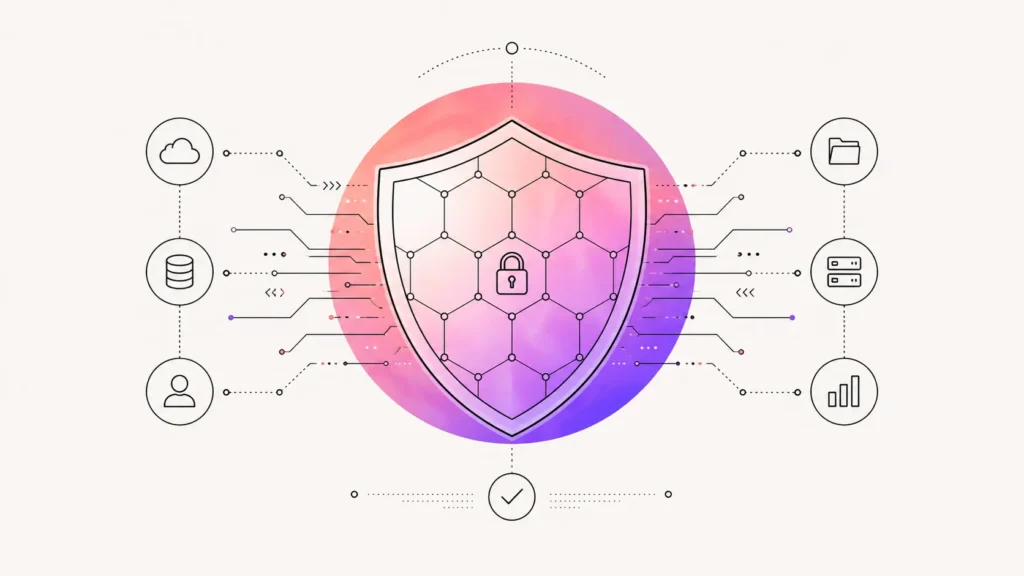
Security should be part of the architecture from the beginning.
When evaluating a cloud consultant, ask how they approach:
- Identity and Access Management.
- Role-based permissions and least-privilege access.
- Multi-factor authentication.
- Encryption and secret management.
- Secure API connections.
- Network security.
- Environment separation.
- Backup and disaster recovery.
- Monitoring, logging, and alerting.
- Vulnerability management.
- Data retention and deletion.
- GDPR-aware data processing.
For businesses processing personal data, GDPR considerations should be incorporated into the design rather than treated as an afterthought. The consultant should also be able to explain how your business will recover from system failures, data loss, security incidents, or other operational disruptions.
A cloud environment is not mature simply because it runs on a major cloud platform. Security, resilience, monitoring, recovery, and operational control are part of the solution.
6. Ask for Evidence of Results
Do not evaluate consultants only by the technologies listed on their website. Ask what their work actually achieved.
Useful evidence might include:
- Case studies.
- Architecture examples.
- Project plans.
- Client references.
- Anonymised implementation examples.
- Before-and-after performance measurements.
- Examples of cost optimisation.
- Examples of improved reporting or automation.
Relevant outcomes could include:
- Faster reporting.
- Reduced manual data preparation.
- Improved application availability.
- Better disaster recovery.
- Lower cloud expenditure.
- Faster software deployments.
- More consistent business KPIs.
- Better visibility across customer or operational data.
- Improved readiness for automation or AI.
Ask how these improvements were measured. For example, “reporting became faster” is less useful than knowing that a weekly reporting process was reduced from several hours of manual work to an automated process. You should also understand what happens after implementation.
Ask:
- Who owns the infrastructure?
- What documentation will you receive?
- What training will your team receive?
- Who maintains the Infrastructure as Code?
- What support is available after launch?
7. Hire a Partner That Can Support Future Growth
Cloud infrastructure and data engineering should not be treated as isolated one-time projects. Your systems, data volumes, security requirements, costs, and business processes will change.
A strong technology partner should be able to support a sensible progression such as:
Assess → Design → Modernise → Integrate → Analyse → Automate → Optimise
For example:
- Assess your business objectives, systems, and data.
- Design a secure and appropriate cloud architecture.
- Migrate or modernise priority systems.
- Connect operational data and establish reliable pipelines.
- Improve reporting, dashboards, and business intelligence.
- Introduce workflow automation and system integrations.
- Add AI, predictive analytics, or Copilot use cases where they provide genuine value.
- Monitor, maintain, optimise, and improve the environment over time.
You do not need to implement everything at once. The important thing is that today’s architecture should not unnecessarily prevent tomorrow’s growth.
Compare Total Scope, Not Just Day Rates
When comparing cloud infrastructure or data engineering proposals, avoid hiring solely on the lowest hourly or daily rate. A cheaper proposal may simply include less work.
Make sure you understand whether the proposal covers:
- Discovery and assessment.
- Architecture design.
- Cloud migration.
- Infrastructure implementation.
- Data integration.
- Data engineering.
- Security and governance.
- Backup and recovery.
- DevOps and CI/CD.
- Infrastructure as Code.
- Testing.
- Documentation.
- Training.
- Cloud and third-party licensing.
- Ongoing monitoring and support.
Also ask what your internal team will need to provide and which costs continue after implementation.
The real question is not:
“Which consultant has the lowest rate?”
It is:
“Which proposal gives us the right outcome for the total cost?”
7 Questions to Ask Before Hiring a Cloud or Data Engineering Consultant
Before signing a contract, ask:
- Which cloud platform do you recommend for our business, and why?
- Can you design and implement the infrastructure directly?
- How will you handle migration, testing, rollback, and operational continuity?
- Can you integrate our existing CRM, ERP, finance, e-commerce, and operational systems?
- How will you assess our data quality and establish a reliable source of truth?
- How will security, GDPR, backup, monitoring, and disaster recovery be handled?
- What will the implementation, cloud consumption, licences, and ongoing support cost?
The answers should be specific to your environment rather than generic descriptions of cloud technology.
Recommended for You: Real-Time Data Integration Services in Portugal: Automate Reporting and Business Insights
Must-have knowledge about Cloud Infrastructure
What does a cloud infrastructure consultant do?
A cloud infrastructure consultant helps businesses design, implement, migrate, secure, monitor, and optimise the environments where their applications, systems, and data operate. This can include cloud architecture, networking, identity management, backups, disaster recovery, Infrastructure as Code, DevOps, monitoring, and cost management.
Does every Portuguese SME need to move everything to the cloud?
No. A full migration is not always necessary or appropriate. Some businesses may benefit more from modernising a specific application, improving backup and recovery, integrating systems, or building a cloud-based data platform first.
Which is best: AWS, Azure, or Google Cloud?
There is no universal best option. The right platform depends on your existing systems, applications, skills, security requirements, data workloads, licensing, integrations, and future plans.
What is Infrastructure as Code?
Infrastructure as Code means defining and managing cloud resources through configuration files rather than relying entirely on manual configuration. Tools such as Terraform can make infrastructure more repeatable, auditable, documented, and easier to manage consistently.
What is the difference between cloud consulting and data engineering?
Cloud consulting focuses on the environment where your applications and data operate, including infrastructure, security, networking, access, reliability, and cost management.
Data engineering focuses on making business data usable by integrating sources, building pipelines, improving data quality, and creating reliable data platforms for reporting, analytics, automation, and AI. Many businesses need both because reliable infrastructure and usable data are closely connected.
How can cloud consulting reduce costs?
Cloud infrastructure consultants can review usage, identify idle or oversized resources, improve resource allocation, select appropriate service tiers, introduce budgets and alerts, and design infrastructure that balances performance, resilience, and cost.
Cost optimisation should also continue after implementation because cloud usage changes as systems and data volumes grow.
How does cloud infrastructure support AI and automation?
AI and automation depend on reliable infrastructure, connected data, secure access, integrations, and scalable processing.
A well-designed cloud and data environment can provide the foundation for reporting, workflow automation, document processing, AI assistants, predictive analytics, and custom applications. The goal should not be moving to the cloud simply because you want to use AI. The goal is to build the foundation that allows useful AI and automation projects to be implemented when the business is ready.
Build a Stronger Cloud and Data Foundation With BluTree
Cloud infrastructure and data engineering are not simply IT projects. They form the technical foundation for reliable reporting, business intelligence, automation, customer insight, and future AI initiatives.
Read about How We Built and Deployed a Secure Multi-Cloud Infrastructure for Startups in Portugal
BluTree helps SMEs and mid-sized businesses across Portugal design, implement, and support practical cloud and data environments. Our services cover cloud architecture, infrastructure implementation, IAM, Terraform, cloud migration, DevOps and CI/CD, data integration, data engineering, Microsoft Fabric, analytics, monitoring, managed cloud support, security, cost optimisation, workflow automation, and AI-ready infrastructure.
We start with your business objective—not a particular technology—and design an approach that is secure, scalable, proportionate, and practical for your team.
Ready to improve your cloud infrastructure or data foundation? Contact BluTree to discuss your requirements.

Frequently Asked Questions about Cloud Infrastructure and Data Engineering Consultancy
cloud infrastructure consultant helps businesses design, migrate, secure, and optimise their cloud environments. This can include cloud architecture, infrastructure automation, databases, monitoring, backups, security, and ongoing optimisation.
A business may need a data engineering consultant when data is spread across disconnected systems, reporting is largely manual, or teams struggle to trust their data. A consultant can help build reliable data pipelines, improve data quality, and create a stronger foundation for analytics and AI.
Look for practical experience with your business requirements, cloud platforms, data engineering, security, integrations, and ongoing support. The right cloud consulting partner should focus on business outcomes rather than simply recommending technology.
Yes. BluTree works with cloud infrastructure and data engineering requirements, including Azure-based environments, data platforms, integrations, automation, and analytics foundations. The focus is on building secure and scalable infrastructure that supports real business needs.
Cloud migration services help businesses move applications, databases, workloads, and data from existing infrastructure to cloud environments. A well-planned migration considers architecture, security, performance, costs, dependencies, testing, and operational continuity.
Microsoft Fabric consulting can help businesses design and improve modern data platforms using services such as OneLake, data integration, analytics, reporting, and governance. It can be particularly useful for organisations looking to bring fragmented data into a more connected analytics environment.
Costs vary depending on the complexity of the infrastructure, data environment, integrations, migration requirements, security needs, and ongoing support. A focused assessment may require a relatively small engagement, while larger cloud migration or data platform projects can require significantly greater investment.