If you’re looking to hire a cloud infrastructure or data engineering consultant in Portugal, the most important thing is to find a partner who can connect your technology investments to concrete business results, not just implement cloud services or create data pipelines. The right consultants help companies modernize their infrastructure, integrate systems that operate in isolation, improve reporting, strengthen security, implement automation, and create reliable technological foundations for analytics and AI.
In this guide, you will learn the seven essential steps to choosing a cloud infrastructure and data engineering consultant in Portugal, as well as the questions you should ask, the skills you should look for, and the mistakes you should avoid. At BluTree , we help startups, SMEs, and medium-sized companies in Portugal design, implement, secure, and optimize cloud and data platforms that support growth, operational efficiency, business intelligence, and digital transformation.
This guide explains how to hire a cloud infrastructure consultant or a data engineering consultant in Portugal , taking into account business needs, technical capabilities, security, costs, and long-term value.
Why are Cloud Infrastructure and Data Engineering important?
Cloud infrastructure provides the environment where your applications, systems, and data operate. In turn, data engineering makes that data useful by connecting systems, improving data quality, creating reliable pipelines, and making information available for reporting, automation, analytics, and AI. The two areas are therefore closely linked.
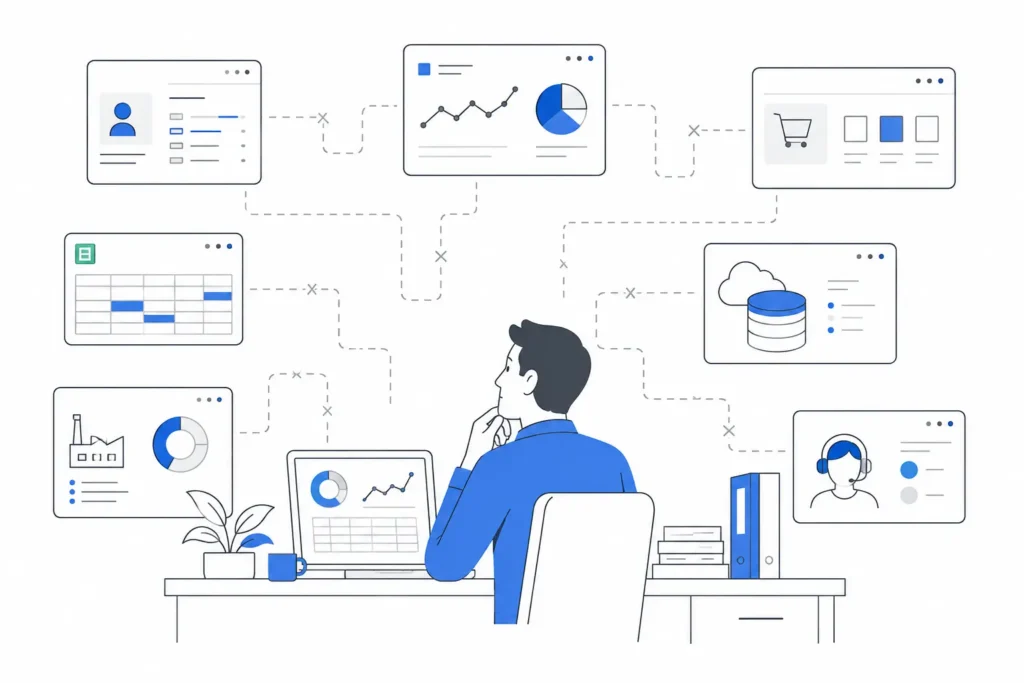
Many companies begin their research convinced they need a cloud migration, a data warehouse, or a Microsoft Fabric implementation. In reality, the underlying challenge is often more comprehensive: unreliable reporting, disconnected business systems, poor data quality, limited visibility into operations, rising infrastructure costs, or preparation for automation and AI initiatives. This is precisely why two companies seeking a “cloud consultant” may need completely different solutions. By understanding business objectives before choosing technologies, you can avoid costly mistakes and ensure your cloud and data investments create long-term value.
You can migrate an application to AWS, Azure, or Google Cloud and still have disconnected systems, manual spreadsheets, inconsistent KPIs, or unreliable reporting. Similarly, you can create a sophisticated dashboard and still have difficulty trusting the results because the underlying data is incomplete, duplicated, outdated, or collected manually.
Therefore, a solid technology partner must look beyond individual tools and consider the cloud, data, security, integrations, and business processes together.
7-Step Guide to Choosing a Cloud Infrastructure Consultant in Portugal
1. Start with the Business Problem
One of the biggest mistakes companies make is starting with the technology.
The conversation often begins with: “Should we migrate to Azure, AWS, or Google Cloud?”
That’s an important question. However, it doesn’t necessarily have to be the first one.
First, ask yourself: “What business problem are we trying to solve?”
For example, a company might want to:
- Reduce manual reporting work.
- Improve visibility into operations.
- Connect CRM, ERP, financial systems, and other applications.
- Reduce technology costs.
- To improve the reliability of applications.
- Preparing data for AI and automation.
- Scaling the technology infrastructure as the business grows.
Therefore, technology should result from business requirements, and not the other way around.
| Business objective | Possible technological requirement |
|---|---|
| Reduce manual reporting | Data integration, automatic refresh, Power BI or Fabric |
| Improve operational efficiency | Workflow automation and integration through APIs |
| Supporting business growth | Scalable infrastructure and performance planning |
| Improve knowledge about customers. | CRM, transactions, support, and marketing are linked. |
| Reduce technological risk | IAM, backups, monitoring and disaster recovery |
| Preparing the company for AI | Reliable data, secure permissions, and robust integrations. |
| Control cloud costs | Analysis of utilization, rightsizing, budgets, and cost monitoring. |
A good consultant should be able to transform a business objective into a practical technical plan .
Recommended: AI Consulting & Business Automation Services in Portugal
2. Verify Real-World Experience on Leading Cloud Platforms
Certifications can demonstrate knowledge. However, they don’t necessarily demonstrate real-world implementation experience. Therefore, when evaluating a cloud infrastructure consultant, ask what they have designed, implemented, migrated, secured, and maintained.
Relevant experience may include:
Amazon Web Services
AWS architecture, networking, compute, storage, IAM, managed services, migration, monitoring, and cost optimization.
Microsoft Azure
Migration to Azure, application infrastructure, identity, security, data services, DevOps, and governance.
Google Cloud
Cloud-native infrastructure, scalable computing, data platforms, analytics, AI services, and managed infrastructure.
DevOps and CI/CD
Automated build, testing, deployment, and release processes that make software development more consistent and repeatable.
Infrastructure as Code
Tools like Terraform allow you to create repeatable, documented, and auditable infrastructure, instead of relying solely on manual configurations. Most importantly, ask yourself why a particular platform or architecture is right for your business.
A good consultant should be able to explain:
- How will the migration or modernization be carried out?
- How will access and security be managed?
- Why is the recommended platform suitable for existing systems?
- How will backups and recovery work?
- How will changes be tested and implemented?
- How will the environment be documented?
- How will cloud costs and usage be controlled after implementation?
This way, you’re not simply hiring someone who knows a particular cloud. You’re evaluating whether that person can apply that technology to your business context.
3. Verify Data Engineering Capability
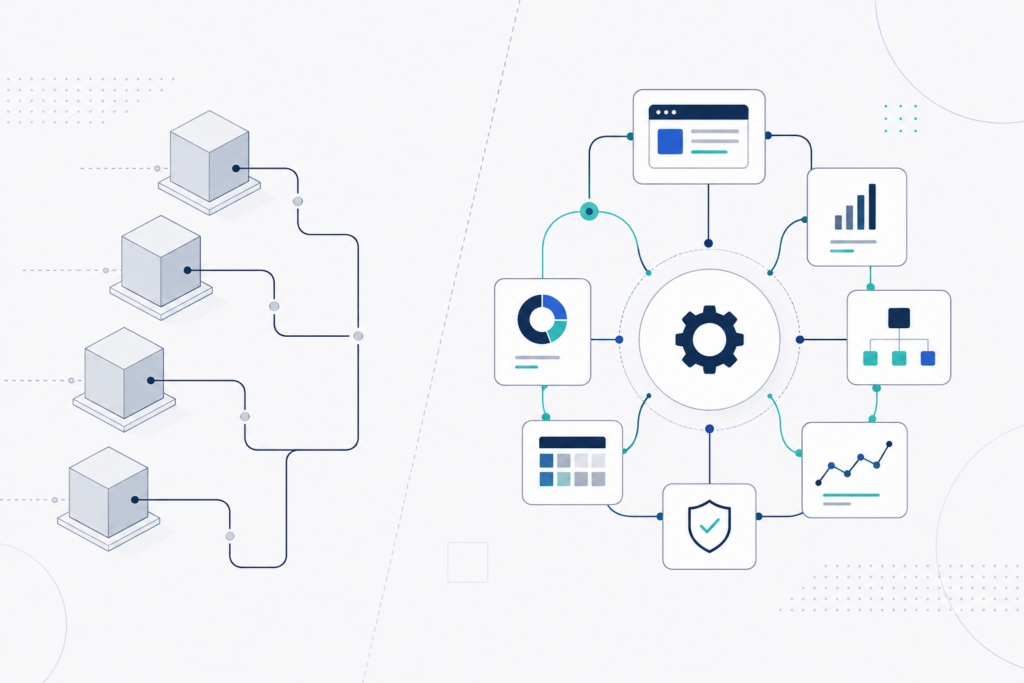
Cloud infrastructure, by itself, does not create useful business information. Data engineering connects your systems and transforms fragmented information into a reliable foundation for reporting, automation, analytics, and AI.
A good data engineering consultant in Portugal should be able to work in areas such as:
Data Integration
The link between CRM, ERP, e-commerce, finance, support, marketing, and operating systems.
Data Quality
Identifying duplicates, missing information, inconsistent definitions, and unreliable records.
Data Architecture
Selecting a suitable architecture, such as a data warehouse, lakehouse, data lake, or a hybrid approach.
Data Modelling
Creating consistent business definitions and reusable models for reporting and analysis.
Data Pipelines
Reliable movement and transformation of data between systems, ensuring that information is available when needed.
Data Governance
Ownership management, access control, data lineage, retention, quality checks, and documentation. For companies using the Microsoft ecosystem, Microsoft Fabric can also be relevant when there is a need to combine data engineering, data integration, data warehousing, analytics, and business intelligence.
However, not all SMEs need an enterprise data platform. The right architecture depends on the company’s size, data volume, existing systems, licensing, regulatory requirements, internal skills, and future plans. Consequently, a good consultant should recommend what the company truly needs, and not simply the most complex architecture they can sell.
4. Ensure the Consultant Understands SMEs
A consultant who works primarily with large companies may not necessarily be the best option for an SME or medium-sized business.
Portuguese SMEs often need:
- Clear and predictable costs.
- Practical solutions that generate value quickly.
- Phased implementation.
- Technology and licensing that are easy to manage.
- Solutions that the internal team can understand and operate.
- Documentation and knowledge transfer.
- Support for existing systems and legacy systems.
This is important because the most technically advanced architecture is not necessarily the best architecture for your business. A solution that requires a large team of specialists to operate may end up creating more problems than it solves.
Therefore, look for a partner who understands the balance between technical quality, business needs, budget, internal capacity, and ease of long-term maintenance.
Recommended: Data Analytics Services in Portugal: Transform Business Data into Actionable Insights
5. Assess Security, Governance, and Recovery
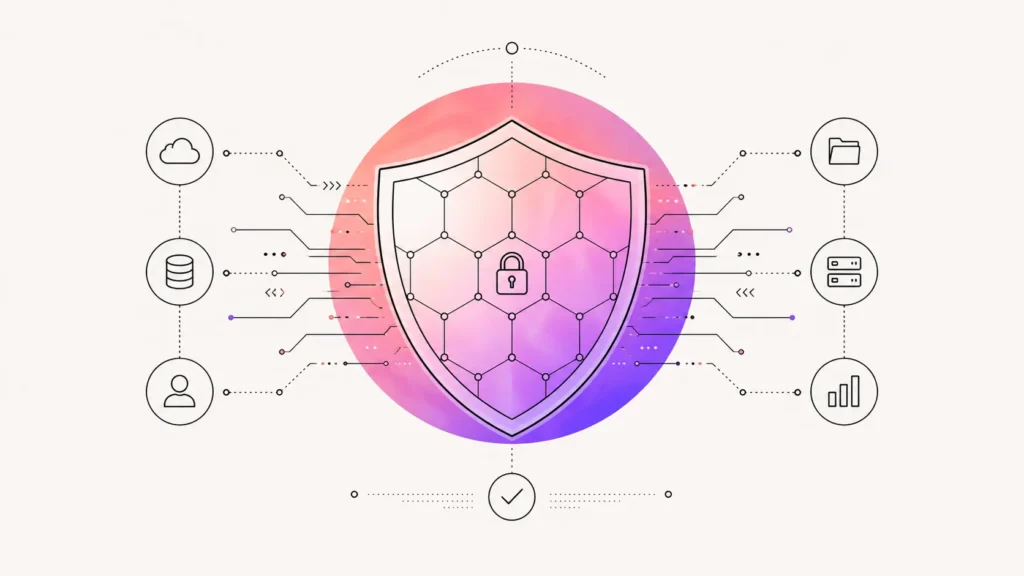
Security should be part of the architecture from the very beginning .
When evaluating a cloud consultant, ask how they approach:
- Identity and Access Management (IAM).
- Permissions based on roles and least-privilege access.
- Multi-factor authentication.
- Encryption and secret management.
- Secure connections via APIs.
- Network security.
- Separation between environments.
- Backup and disaster recovery.
- Monitoring, logging and alerting.
- Vulnerability management.
- Data retention and deletion.
- Data processing in accordance with GDPR requirements.
For companies that process personal data, GDPR -related issues should be incorporated into the solution design and not treated as an afterthought.
In addition, the consultant must be able to explain how the company can recover from:
- system failures;
- data loss;
- security incidents;
- or other operational interruptions.
A cloud infrastructure is not mature simply because it runs on a large cloud platform.
Security, resilience, monitoring, recovery, and operational control are all part of the solution.
6. Request Evidence of Results
Don’t judge consultants solely by the technologies presented on their website.
Instead, ask what the work done managed to improve .
Useful evidence may include:
- Case studies.
- Examples of architecture.
- Project plans.
- Customer references.
- Anonymous implementation examples.
- Performance measurements before and after.
- Examples of cost optimization.
- Examples of improved reporting or automation.
Relevant results may include:
- Faster reporting.
- Less manual data preparation.
- Greater availability of applications.
- Best disaster recovery.
- Lower cloud expenses.
- Faster software deployments.
- More consistent business KPIs.
- Greater visibility into customer or operational data.
- Greater preparedness for automation or AI.
However, it’s not enough to hear that “reporting has become faster”.
Ask how this improvement was measured .
For example, it is much more useful to know that a weekly reporting process has gone from several hours of manual work to an automated process.
Furthermore, you should understand what happens after implementation.
Ask:
- Who is responsible for the infrastructure?
- What documentation will you receive?
- What will your team’s composition be?
- Who maintains Infrastructure as Code?
- What support is available after launch?
This allows you to assess not only the initial design, but also the solution’s ability to continue functioning correctly.
7. Choose a Partner Who Can Support Future Growth
Cloud infrastructure and data engineering should not be treated as isolated, one-off projects.
Your systems, data volumes, security requirements, costs, and business processes will change.
Therefore, a solid technology partner must be able to support an evolution such as:
Evaluate → Design → Modernize → Integrate → Analyze → Automate → Optimize
For example:
- Evaluate business objectives, systems, and data.
- Designing a secure and suitable cloud architecture.
- Migrate or modernize priority systems.
- Connecting operational data and creating reliable pipelines.
- Improve reporting, dashboards, and business intelligence.
- Introduce workflow automation and system integrations.
- Add AI, predictive analytics, or Copilot when these technologies create real value.
- To monitor, maintain, optimize, and improve the environment over time.
You don’t need to implement everything at once.
The important thing is that today’s architecture does not unnecessarily limit tomorrow’s growth.
Compare the Total Scope and Not Just the Daily Rates
When comparing cloud infrastructure or data engineering proposals , avoid choosing solely based on the lowest hourly or daily rate.
A cheaper offer might simply involve less work.
Therefore, confirm that the proposal includes:
- Discovery and assessment.
- Architectural design.
- Cloud migration.
- Infrastructure implementation.
- Data integration.
- Data engineering.
- Security and governance.
- Backup and recovery.
- DevOps and CI/CD.
- Infrastructure as Code.
- Testing.
- Documentation.
- Training.
- Cloud and third-party licensing.
- Continuous monitoring and support.
In addition, ask what your internal team will need to provide and what costs will continue after implementation.
The real question isn’t: “Which consultant has the lowest rate?”
The question is: “Which proposal offers the best possible outcome for the total cost?”
7 Questions to Ask Before Hiring a Cloud or Data Engineering Consultant
Before signing a contract, ask:
1. Which cloud platform do you recommend for our business and why?
The response should consider existing systems, applications, internal skills, data, security, integrations, and future plans.
2. Can they design and implement the infrastructure directly?
This helps to determine if the partner has practical implementation skills and not just consulting knowledge.
3. How will you handle migration, testing, rollback, and business continuity?
A well-planned migration should consider dependencies, risks, testing, and business continuity.
4. Can they integrate our CRM, ERP, financial systems, e-commerce, and operating systems?
The ability to integrate is particularly important when data is distributed across multiple platforms.
5. How will you assess the quality of our data and establish a reliable source of truth?
Without consistent data, reporting, analytics, and AI become much harder to trust.
6. How will security, GDPR, backups, monitoring, and disaster recovery be handled?
These elements should be part of the architecture from the very beginning.
7. How much will implementation, cloud usage, licenses, and ongoing support cost?
Ask for a breakdown of the total cost, not just the initial project cost. The answers should be specific to your environment and not just generic descriptions of cloud technology.
Recommended: Real-Time Data Integration Services in Portugal: Automate Business Reporting with BluTree
Essential Knowledge of Cloud Infrastructure
What does a cloud infrastructure consultant do in Portugal?
A cloud infrastructure consultant helps companies design, implement, migrate, secure, monitor, and optimize the environments where applications, systems, and data run.
This may include cloud architecture, networking, identity management, backups, disaster recovery, Infrastructure as Code, DevOps, monitoring and cost management.
Do all Portuguese SMEs need to migrate everything to the cloud?
No.
A complete migration is not always necessary or appropriate.
Some companies may benefit more from modernizing a specific application, improving backup and recovery, integrating systems, or first creating a cloud-based data platform.
Therefore, the decision should stem from business needs and not simply from the trend of migrating to the cloud.
Which is the best option: AWS, Azure, or Google Cloud?
There is no universally best option.
The right platform depends on existing systems, applications, internal skills, security requirements, data workloads, licensing, integrations, and future plans.
Therefore, a good consultant should explain why a particular cloud platform is suitable for your context .
What is Infrastructure as Code?
Infrastructure as Code, or IaC, means defining and managing cloud resources through configuration files instead of relying solely on manual configurations.
Tools like Terraform can make infrastructure more repeatable, auditable, documented, and consistent.
What is the difference between cloud consulting and data engineering?
Cloud consulting focuses on the environment where applications and data operate, including infrastructure, security, networking, access, reliability, and cost management. Data engineering, on the other hand, focuses on making business data usable through source integration, pipeline building, data quality improvement, and the creation of data platforms for reporting, analytics, automation, and AI.
Many companies need both areas because reliable infrastructure and usable data are directly linked.
How can cloud consulting help reduce costs?
Cloud infrastructure consultants can analyze resource utilization, identify inactive or oversized resources, improve allocation, select appropriate service tiers, and implement budgets and alerts.
Furthermore, they can help design an infrastructure that balances performance, resilience, and cost. Cost optimization should continue after implementation, as cloud usage changes as systems and data volumes grow.
How does cloud infrastructure support AI and automation?
AI and automation depend on reliable infrastructure, connected data, secure access, integrations, and scalable processing capacity.
A well-designed cloud and data environment can provide the foundation for:
- reporting;
- workflow automation;
- document processing;
- AI assistants;
- predictive analytics;
- and customized applications.
However, the goal shouldn’t be to migrate to the cloud simply because you intend to use AI. The goal should be to create a technological foundation that allows you to implement useful AI and automation projects when the business is ready.
Build a Stronger Cloud and Data Foundation with BluTree
Cloud infrastructure and data engineering are not simply IT projects. They are the technical foundation for reliable reporting, business intelligence, automation, customer insights, and future AI initiatives.
Read also: How We Created and Implemented a Secure Multi-Cloud Infrastructure for Startups in Portugal
BluTree helps SMEs and medium-sized companies in Portugal to design, implement , and support practical cloud and data environments.
Our services include:
- Cloud architecture.
- Infrastructure implementation.
- IAM.
- Terraform.
- Cloud migration.
- DevOps and CI/CD.
- Data integration.
- Data engineering.
- Microsoft Fabric.
- Analytics.
- Monitoring.
- Managed cloud support.
- Security.
- Cost optimization.
- Workflow automation.
- Infrastructure prepared for AI.
We start with the business objective , not a specific technology. Then, we design an approach that is secure, scalable, proportionate, and practical for your team .
Looking to improve your cloud infrastructure or data foundation? Contact BluTree to discuss your requirements.

…
Frequently Asked Questions about Cloud Infrastructure and Data Engineering
A cloud infrastructure consultant helps companies design, migrate, secure, and optimize cloud environments. This can include architecture, infrastructure automation, databases, monitoring, backups, security, and continuous optimization.
A company may need a data engineering consultant when data is scattered across disconnected systems, reporting is largely manual, or teams struggle to trust the data. The consultant can create reliable pipelines, improve data quality, and establish a stronger foundation for analytics and AI.
Look for hands-on experience with your business requirements, cloud platforms, data engineering, security, integrations, and ongoing support. The partner should focus on business outcomes, not just recommending technology.
Yes. BluTree works with cloud infrastructure and data engineering requirements, including Azure environments, data platforms, integrations, automation, and analytics foundations. The focus is on creating secure and scalable infrastructure that meets concrete business needs.
Cloud migration services help companies transfer applications, databases, workloads, and data from existing infrastructure to cloud environments. A well-planned migration considers architecture, security, performance, costs, dependencies, testing, and operational continuity.
Microsoft Fabric consulting can help companies design and improve modern data platforms using services such as OneLake, data integration, analytics, reporting, and governance. It can be particularly useful for organizations looking to bring fragmented data together in a more integrated analytics environment.
The cost depends on the complexity of the infrastructure, data environment, integrations, migration requirements, security, and ongoing support. A focused assessment may represent a relatively small project, while a large cloud migration or data platform implementation may require a significantly larger investment.
Fontes indicadas no artigo original